Skip to content
Rabat, Morocco
Posts

AI Agents in November 2026 — From Demos to Real Work

November 13, 2026
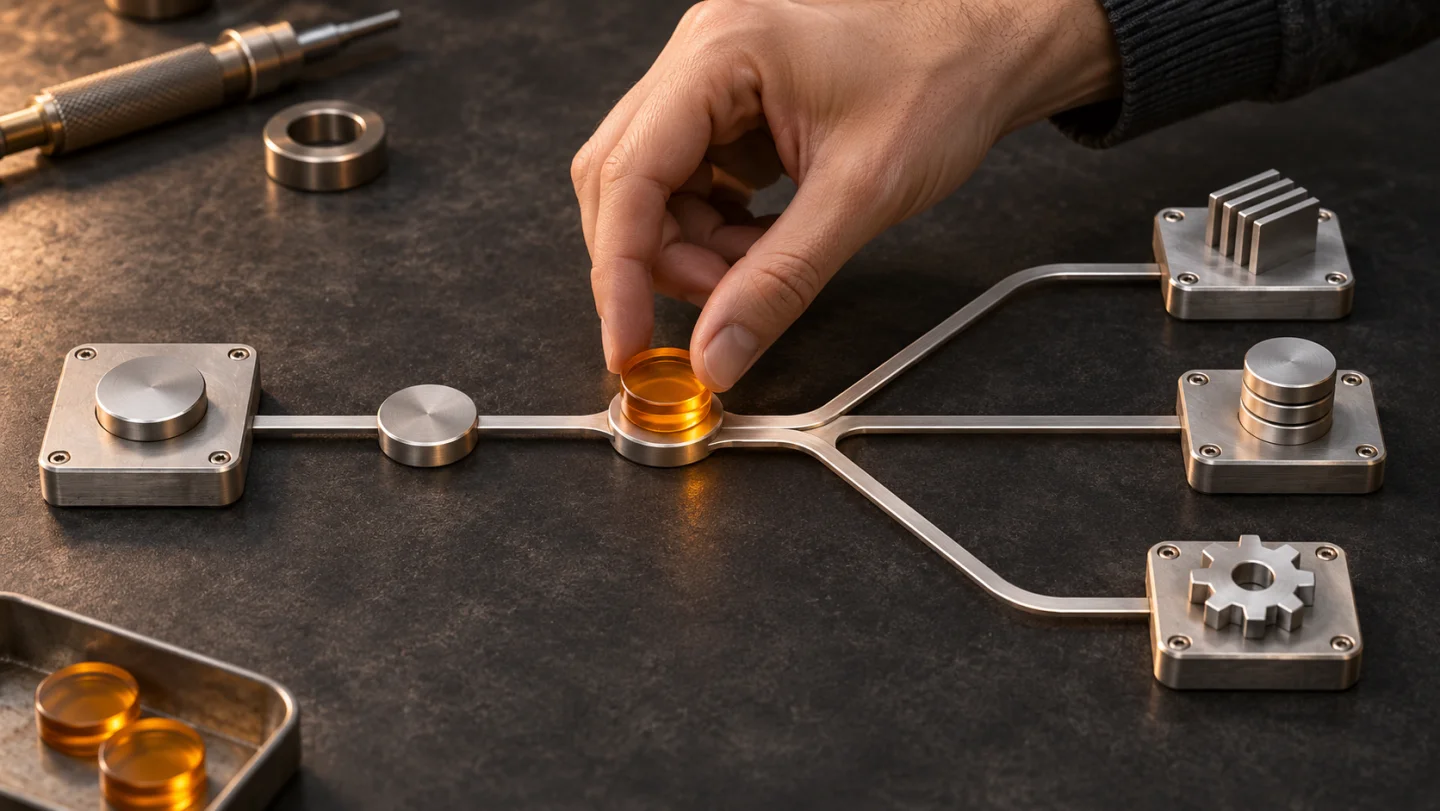
A hand places an amber marker at the junction of three metal tracks
An agent can return a polished spreadsheet and still use last month's data. It can pass a test suite while quietly undoing a decision the team made yesterday. Those failures are easy to miss in a demo. This week's launches and research put more attention on what agents produce, what they carry across sessions, and what their logs can tell us about the work. On November 10, Google widened access to Gemini 4 Carbon and previewed
/swarm
in Antigravity. A single prompt can start a coordinated group of agents working in isolated workspaces, with progress visible in real time. Google describes using Carbon for planning or auditing while faster models handle work in parallel. For a codebase with independent modules, that could speed up implementation. The harder work begins when the changes meet at a shared interface and have to pass integration tests together. Google's Gemini 4 Carbon announcement
Also on November 10, OpenAI introduced Businesses in ChatGPT in beta. Eligible e-commerce and online service businesses in the US can build, test, and publish a Business Agent that answers customer questions using information they supply. A customer can start a labeled conversation with the business's agent to compare offerings or ask follow-up questions. That makes product accuracy and the freshness of the underlying information part of the agent's job. OpenAI's Businesses in ChatGPT announcement Google DeepMind and Artificial Analysis launched the Multimodal Knowledge Agent benchmark on November 10. Its 200 private tasks span 10 industries and ask agents to use dense visual inputs, such as schematics and scans, to produce files like spreadsheets, slide decks, and reports. Artificial Analysis runs the models in the same agent harness and uses a model judge to grade deliverables against expert-written rubrics. Claude Fable 5.2 earned 57% of the weighted credit on the harder criteria at launch, and Gemini 4 Carbon earned 54%. Multimodal Knowledge Agent benchmark methodology and results ARE-bench, a preprint posted the same day, tests what happens when an agent joins work already in progress. Its 75 tasks preserve earlier instructions and the state of real research workspaces, including unfinished files and failed attempts. The strongest of seven models met every checklist item on 66.2% of tasks. Three models passed about 69% of tasks when judged on delivery and general norms alone. Adding requirements about earlier decisions and the workspace brought their rates down to 28.4–40.0%. ARE-bench preprint On November 6, Anthropic described how Claude agents can review past transcripts between sessions, revise memory notes, and decide which context to load next time. Anthropic calls that process dreaming. It updates the notes the agent can read in later sessions while the model's weights stay fixed. On November 12, the ReA-Bench authors took up a related question. Can an auditor reconstruct what happened from an agent's execution trace? Their preprint includes legitimate actions that look suspicious until the auditor checks the user's authorization and the surrounding evidence. Anthropic's agent memory research · ReA-Bench preprint For a coding agent, one test captures the stakes. Give it an unfinished branch, a decision from the previous session, and a fixture that still reflects the old design. Ask it to finish the change. Score the patch, check that it preserves the earlier decision, and inspect the trace to see which files and tests it actually used. Those observations also help explain what to reward during training. Read the companion article on RLHF and preference data

Enjoyed this blog?

Seriously, thank you for spending your time here. If you made it to the end, you’re the kind of person who cares about craft, not just quick fixes.If you’d like to support my work, pick one (no pressure). It genuinely helps me keep writing and improving these blogs.
Subscribe to get a heads-up when I publish the next one. I keep it low-volume, and I only send what I’d personally want to read.

Subscribe to Josias's Newsletter

I occasionally write about software engineering, technology, and share thoughts on innovation and engineering.
One last thing: if you know someone who’d benefit from this, sharing it with them is one of the best compliments you can give. I appreciate you.